Private Equity Investment Strategies for the Modern Private Equity Firm and Hedge Fund Manager
Maximize private equity fund returns with NorthHaven. We help the private equity industry, fund managers, and institutional investors simulate

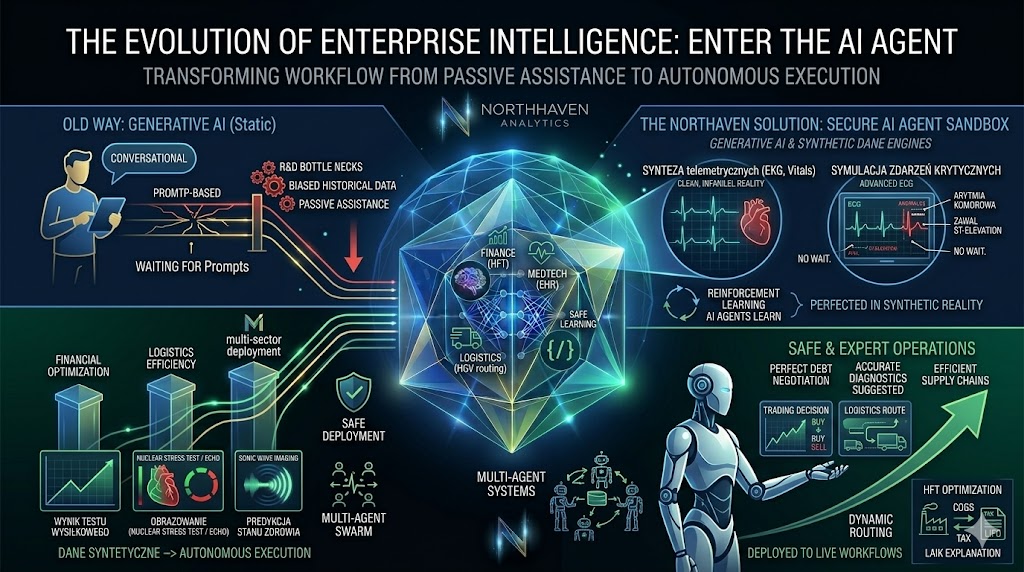
In the evolving landscape of the global financial markets, private equity has established itself as a cornerstone of alternative investment. For the modern institutional investor and fund manager, understanding the nuances of the private equity industry is no longer optional—it is a requirement for survival. At NorthHaven Analytics, we provide the AI-native decision infrastructure that allows large private equity firms and private equity investors to simulate the future of their portfolio companies before deploying capital.
This comprehensive guide explores the history of private equity, the structure of a private equity deal, and how deep-tech simulation helps private equity firms often outperform the market. Whether you are managing a new fund or looking to invest in private companies, the rules have changed.
Understanding Private Equity: From Private Equity Deal to the Private Equity Industry
To grasp the full potential of this asset class, we must first define what is known as private equity. Unlike a mutual fund or public companies, private equity involves capital investment into private companies that are not listed on public exchanges.
The History of Private Equity and Private Equity Investors
The history of private equity dates back to the early 20th century, but it exploded in the 1980s with the rise of leveraged buyouts. Today, the private equity industry manages trillions in assets. Private equity investors—ranging from sovereign wealth funds to family offices—seek returns that outperform public markets. However, as the market matures, finding a lucrative private equity acquisition becomes harder.
Private Equity vs. Hedge Fund and Mutual Fund Structures
A common confusion arises between private equity and other investment vehicles.
- Unlike mutual funds, which are liquid and trade daily, private equity funds typically have a lock-up period of 10 years.
- Similar to a mutual fund, they pool money, but they take active roles in management.
- A hedge fund may invest in public or private assets but usually has a shorter horizon than the long-term investment focus of a pe firm.
A private equity firm may also engage in investment banking activities or advisory roles, further blurring the lines. However, the core remains: acquiring equity ownership in a company to drive value.
The Role of the Fund Manager and Institutional Investor in Private Equity Funds

The relationship between the limited partner (LP) and the fund manager (GP) is the bedrock of any private equity fund.
How Institutional Investors Deploy Capital in New Funds
Institutional investors, such as public pension funds and insurance companies, are the primary source of capital. They invest in private equity to diversify their portfolios. When an institutional investor commits to a new fund, they are trusting the private equity managers to execute a specific investment strategy. At NorthHaven, we help private equity fund managers build trust with LPs by providing transparent, audit-ready simulations of fund returns. Instead of relying on gut feeling, fund managers can show LPs a probabilistic map of returns for investors under various stress scenarios.
The Responsibilities of Private Equity Fund Managers
Private equity fund managers are responsible for sourcing deals, managing acquired companies, and eventually exiting. They must navigate complex private equity transactions and ensure that the equity invested generates a high internal rate of return (IRR). A fund manager using NorthHaven’s Scenario Engine can simulate the impact of macro-economic shifts on their investment fund, ensuring that capital gains are maximized even in a downturn.
Private Equity Strategies, Private Credit, and the Private Equity Acquisition Model
Not all private equity strategies are the same. From venture capital firms to massive buyouts, the type of private equity dictates the risk profile.
Private Equity and Private Credit: A Converging Investment Strategy
Recently, we have seen a massive rise in private equity and private credit. As banks retreat, private equity firms often step in to provide debt. Private credit allows investors in private equity to participate in the debt stack. NorthHaven specializes in this niche. Our Covenant Early-Warning Model is designed for private equity and private credit funds. We simulate the debt used to finance deals and predict covenant breaches 6 months in advance. This is critical for private equity funds may hold both equity and debt positions.
Growth Equity and Venture Capital Firms
Venture capital is often considered a subset of private equity, but it focuses on early-stage startups. Growth equity sits in the middle, investing in mature companies that need capital to expand. Venture capital firms take minority stakes, whereas a large private equity firm usually seeks majority private equity ownership. NorthHaven’s tools are essential here. Whether you are a pe firm doing a buyout or a venture capital firm looking at late-stage growth, you need to know if the target can survive a recession.
Structuring a Private Equity Deal: Debt Used to Finance and Equity Ownership
The mechanics of a private equity deal are complex. It involves a mix of equity and debt to maximize returns.
The Role of Investment Banking in Private Equity Transactions
Investment banking plays a key role in facilitating private equity transactions. They advise on the private equity acquisition and help structure the financing. However, bankers sell a “story.” Private equity investors need facts. Using NorthHaven’s synthetic data generator, private equity companies can run their own independent validation of the banker’s model. We test the capital investment assumptions against 5,000 market scenarios.
Private Equity-Backed Companies and Operational Value
Once a company becomes private equity-backed, the clock starts ticking. The pe fund needs to improve operations to increase the valuation. Private equity-backed companies often undergo aggressive restructuring. Private equity managers look at COGS, inventory (LIFO/FIFO), and supply chains. NorthHaven simulates these operational changes to see how they impact the capital gains tax rate exposure and overall fund returns.
The Landscape of United States Private Equity and Global Private Equity

While United States private equity remains the dominant force, global private equity is catching up.
The American Investment Council and Regulatory Standards
Organizations like the American Investment Council and the National Venture Capital Association advocate for the industry. They set standards for private fund advisers and accredited investors. However, regulations are tightening. Private equity firms must be more transparent. NorthHaven’s AI models provide “explainable AI” (XAI) outputs, which are crucial for compliance when reporting to investors in private equity funds.
Sovereign Wealth Funds and Global Private Equity Exposure
Sovereign wealth funds from the Middle East and Asia are massive investors in private equity. They seek exposure to private markets in the West. For a global private equity firm, managing currency risk and geopolitical risk is vital. Our Scenario Engine can model these global macro factors, protecting the investment portfolio of international limited partners.
Private Equity Funds May Use Continuation Funds and Secondary Markets
As the private equity industry evolves, new types of investment vehicles emerge.
Continuation Funds and the Secondary Market
Sometimes, a private equity firm wants to hold an asset longer than the standard 10 years. They create continuation funds. This allows them to move portfolio companies from an old fund to a new fund. This transaction requires a fair valuation. Investors in private equity need assurance that the price is right. NorthHaven provides objective, data-driven simulations of long-term investment value, justifying the transfer price to accredited investors.
Opportunity Funds and Distressed Assets
Opportunity funds are a type of private equity that targets distressed assets. When mature companies fail, these funds invest to turn them around. This is high-risk private investment. A pe firm needs to know: is this company a “zombie” or a turnaround candidate? NorthHaven’s Exit & Liquidity Simulator provides the answer, analyzing investment strategies in illiquid assets.
Private Equity vs. Mutual Funds: Why Investors in Private Equity Choose Illiquidity
Understanding why investors in private equity funds accept illiquidity is key.
Unlike Mutual Funds: The Power of Patience
Unlike mutual funds, which must handle daily redemptions, a private equity investment is patient capital. This allows private equity managers to make strategic decisions that pay off years later. Private equity accounts are not for day trading. They are for wealth compounding. Private equity plays a long game. NorthHaven aligns with this by providing long-horizon simulations (3-4 years forward) rather than short-term signals.
Diversified Investment Portfolio with Alternative Investment
Including private equity in a diversified investment portfolio reduces overall volatility. Because private market valuations don’t swing daily like the stock market, they offer stability. However, private equity firms often mark their own homework. NorthHaven adds a layer of independent verification to these valuations, increasing confidence for the institutional investor.
Why Private Equity Companies and PE Firms Need NorthHaven Analytics

The modern pe firm is data-rich but insight-poor. Private equity companies sit on terabytes of data but struggle to use it for prediction.
Enhancing Private Equity Strategies with AI
Private equity strategies are becoming more quantitative. Private equity fund managers are hiring data scientists. But building internal tools is slow. NorthHaven offers a plug-and-play solution for private equity investors. We help you:
- Invest in private companies with higher confidence.
- Monitor private equity-backed assets for risk.
- Optimize equity ownership structures.
- Predict returns for investors with high accuracy.
NorthHaven’s Role in the Private Equity Deal
Before you sign a private equity deal, run it through NorthHaven. We act as the ultimate stress test.
- Private Equity Acquisition: Will the target survive a 30% revenue drop?
- Private Credit: Will the debt used to finance trigger a default?
- Exit: Will the capital gains tax rate change eat your profits?
Conclusion: The Future of Private Equity Investment and Private Capital
The definition of private equity is expanding. It now encompasses private capital, real estate, and private credit. The number of private assets available to invest in is growing.
For the investment firm of the future, success lies in simulation. Traditional private equity funds that refuse to adapt will be left behind by those who embrace AI.
NorthHaven Analytics is the partner for this new era. We help venture capital firms, hedge funds, and large private equity firms navigate the complexity of the modern market.
Whether you are an accredited investor looking to invest in private equity, or a fund manager looking to protect your portfolio companies, NorthHaven provides the intelligence you need.
Invest in Private Equity. Invest in the Future.