LLM Telemetry and GenAI Observability: Using OpenTelemetry for the Ultimate LLM Observability Framework in High-Stakes Finance
Secure your large language model with Northhaven. Using OpenTelemetry for LLM observability brings OTel to your GenAI LLM application.
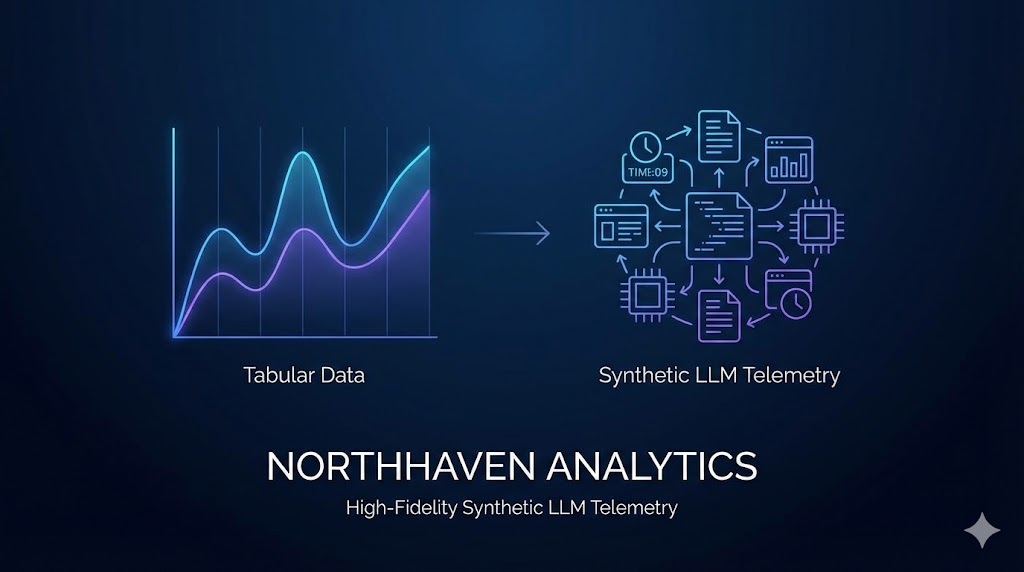
In the cutting-edge ecosystem of modern finance, the integration of a large language model (or large language models in general) is no longer a futuristic experiment; it is a baseline necessity. Global banks, private debt funds, and quantitative trading desks are rapidly deploying GenAI to analyze massive credit memos, automate compliance checks, and power sophisticated internal chatbots. However, introducing an LLM into a heavily regulated financial environment creates a terrifying “black box” problem. When an AI makes a multi-million-dollar decision, you cannot simply trust it; you must verify it. This is where LLM telemetry and robust LLM observability become absolutely critical.
Northhaven Analytics provides the ultimate deep-tech infrastructure for financial institutions to securely deploy AI. We specialize in monitoring and debugging complex LLM-powered systems. By leveraging OpenTelemetry and an advanced observability stack, we allow banks to see exactly what happens inside their AI. Whether you need to track tokens consumed, measure latency, or perform root cause analysis when an LLM application hallucinates, our LLM framework provides the absolute transparency required for high-stakes finance.
What is LLM Telemetry? Defining the Need for LLM Observability and OpenTelemetry in a Large Language Model Application

To understand our offering, we must first translate these deep-tech terms. What exactly is telemetry? (Simply put: Imagine telemetry as the indestructible “black box” flight recorder on a commercial airplane. It constantly records altitude, engine heat, and pilot steering. If something goes wrong, investigators open the black box to see exactly what happened second by second. LLM telemetry is the exact same concept, but for artificial intelligence. It records every thought, input, and calculation the AI makes.)
Traditional software is predictable: if A happens, then B happens. LLMs, however, are probabilistic. Because they generate text dynamically, a standard observability tool built for traditional software will fail. To achieve true AI observability, we need a new standard. This is why the financial industry is using OpenTelemetry (often abbreviated as OTel).
OpenTelemetry is a massive open source project and an open standard designed to standardize how performance data is collected. By utilizing GenAI semantic conventions, we ensure that every piece of telemetry data—whether it is an input prompt or a generated output—is categorized uniformly. This allows data scientists to troubleshoot and iterate on their AI applications safely.
The Anatomy of LLM Traces: Understanding Trace, Span, Metric, and Log Outputs for GenAI
When we implement an observability framework designed for AI, we rely on four fundamental pillars of data:
- Trace: A trace is the complete journey of a user’s request. From the moment a banker types a question into a financial chatbot, to the moment the AI responds, the trace maps the entire trip.
- Span: A span is a single, specific step within that journey. For instance, if the AI has to search a database before answering, that database search is one span. An LLM application might have dozens of spans per request.
- Metric: A metric is a numerical measurement over time. (Simply put: Think of a metric like the speedometer or the RPM gauge on your car’s dashboard.) We track the metric of tokens consumed and API latency.
- Log: A log is a text-based diary entry. If a critical error occurs in the backend, the system writes a log explaining what broke.
By combining every trace, span, metric, and log, Northhaven provides complete observability across your entire AI infrastructure.
Why Northhaven Uses OpenTelemetry and GenAI Semantic Conventions to Standardize Telemetry Data and Avoid Vendor-Specific Lock-in

Historically, software companies forced banks into vendor-specific ecosystems. If you bought their monitoring tool, you were trapped using their proprietary code forever. Northhaven rejects this approach. Our infrastructure is built on top of OpenTelemetry, meaning you own your data.
We utilize the OpenTelemetry Collector (or OTel Collector) to gather data from your LLM. This collector acts as a central post office, receiving data and routing it via the OTLP protocol to your existing observability dashboards.
Bypassing Vendor-Specific Tools with Open Standard OTel Instrumentation and the OpenTelemetry Collector
To capture this data, we must instrument the code. Instrumentation is the process of adding tiny sensors into your AI application. Northhaven relies heavily on auto-instrumentation in Python, which automatically wraps around your code without requiring your developers to manually write thousands of tracking sensors.
Because our solution is built on top of the existing OTel ecosystem, the OTel instrumentation integrates seamlessly. We use an exporter to send this rich telemetry data directly to the tools your IT team already uses, allowing for flawless integration with Datadog, Grafana, or Prometheus. You do not need to buy a new dashboard; we simply upgrade your current observability stack.
Monitoring and Debugging LLM-Powered Chatbots and Retrieval-Augmented Generation (RAG) Workflows
The most popular use case for LLMs in finance today is Retrieval-Augmented Generation (RAG). (Simply put: A standard LLM is like a student taking a closed-book exam relying only on their memory—they might invent answers or “hallucinate”. RAG changes this into an “open-book exam”. Before the AI answers a question, it is forced to retrieve a verified document from your secure company database and read it first. It only generates an answer based on your private files.)
While RAG prevents hallucinations, it creates a highly complex workflow. A user’s prompt must travel to an endpoint, search a specialized database, return the context, and then hit the AI API. If the system is slow, finding the root cause of the delay is like finding a needle in a haystack.
Tracking Tokens Consumed, Prompt Details, and Latency Across Vector DB Integrations like Pinecone and Qdrant
In a RAG architecture, the “open book” the AI searches is called a Vector Store or Vector DB (like Pinecone, Qdrant, or Weaviate). (Simply put: A Vector DB is a magical, hyper-fast library. Instead of organizing books alphabetically, it organizes sentences by their actual meaning, allowing the AI to find the exact paragraph it needs in milliseconds.)
Northhaven’s LLM observability tracks the entire RAG pipeline. We capture the exact prompt details to see what the user asked. We monitor the latency (the delay) when the system queries Pinecone or Qdrant. Most importantly, we monitor the tokens consumed. (Simply put: Tokens are the currency of AI. Think of them as the “taxi meter” charges. Every word the AI reads or writes costs a fraction of a cent. If a financial model reads a 500-page contract, the taxi meter spins very fast.)
By tracking tokens consumed across all api calls, we prevent massive, unexpected billing spikes from providers like OpenAI or Anthropic.
How to Instrument Your LLM Application: Integrating OpenLLMetry, Langchain, and LlamaIndex for Complete AI Observability
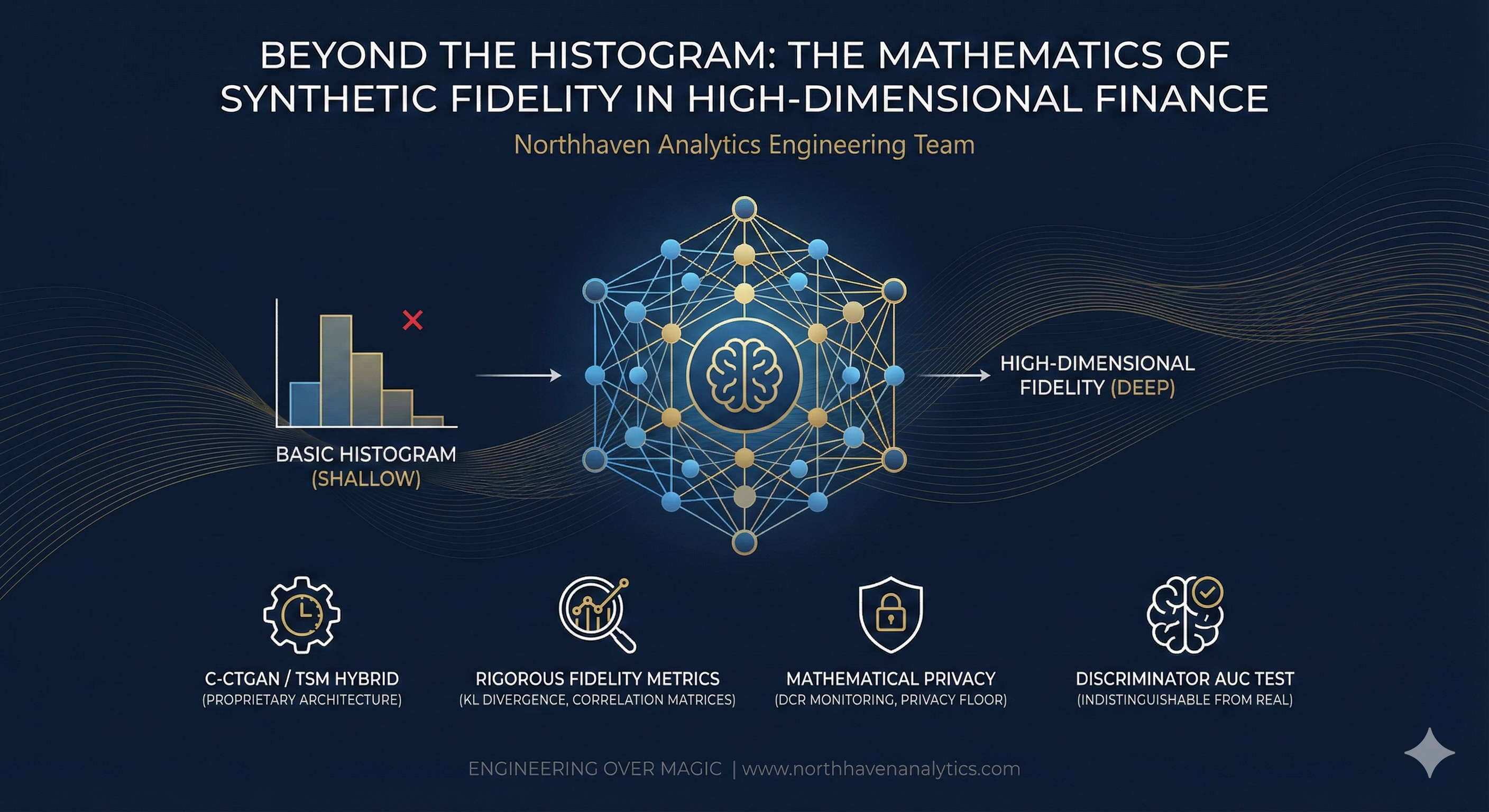
To manage the complexity of building AI, developers use an LLM framework such as Langchain or LlamaIndex. These frameworks act as the scaffolding for building AI apps. However, tracking data flowing through them requires specialized tools like OpenLLMetry (developed by Traceloop).
OpenLLMetry is an open source project specifically designed for AI. It is an open-source observability framework designed to work perfectly with Langchain or LlamaIndex.
Auto-Instrumentation in Python: Export Telemetry Data to Your Existing Observability Stack
When you use OpenLLMetry, you gain immediate visibility into your Python code. The open-source observability capabilities of OpenLLMetry provide automatic tracking of every call made to an external API.
If an investment analyst runs a query and the application crashes, the data scientists can look at the LLM traces generated by the system. They can see the exact metadata and annotation attached to the failure, drastically reducing the time it takes to debug the root cause analysis. Instead of guessing why the AI failed, the telemetry shows the exact line of code where the connection dropped.
Northhaven Use Cases: Troubleshooting AI Applications, LLMOps, and Root Cause Analysis for Financial Institutions
In high-stakes finance, LLMOps (Large Language Model Operations) is the discipline of keeping AI running safely in production. Our clients rely on Northhaven’s infrastructure to guarantee the performance and reliability of their dataset analysis and predictive models.
Whether you are hitting an API-based model like GPT-4 from OpenAI or Claude from Anthropic, Northhaven provides the safety net.
Optimizing Performance and Reliability in API-Based LLMs (OpenAI, Anthropic) Using OpenLLMetry
By implementing our LLM observability architecture, financial institutions can confidently deploy AI. We allow you to export telemetry data to your preferred APM (Application Performance Monitoring) platform.
We provide the definitive framework designed to secure your AI. From capturing the initial input to standardizing the final output, Northhaven ensures that your large language model never operates in the dark. Protect your firm from hallucinations, control your token costs, and guarantee the absolute reliability of your financial AI with Northhaven Analytics.