Healthcare Data in 2025: The Complete Guide to Health Statistics, Analytics & Synthetic Medical Datasets
The global healthcare industry generates more data than any other sector — and uses less of it than almost any other. Healthcare data holds the answers to the most important questions in medicine, public health, and clinical decision-making. The challenge is unlocking it safely. Northhaven Analytics now generates synthetic medical datasets that make this possible.
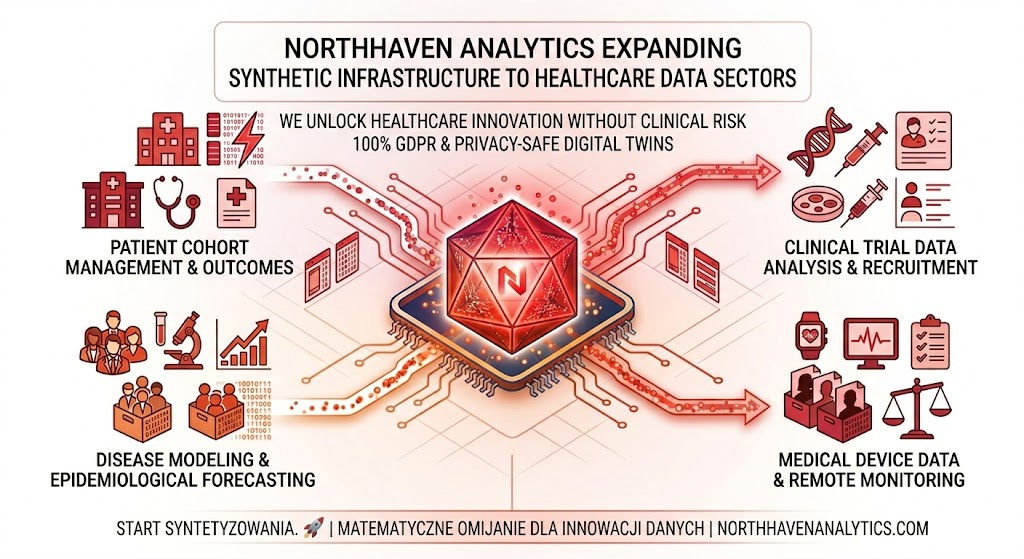
Healthcare data is simultaneously the most valuable and the most constrained resource in modern medicine. Every patient encounter, every lab result, every prescription, every hospital admission generates health information that — if properly collected, structured, and analysed — could transform patient care, accelerate drug discovery, optimise resource allocation, and prevent millions of deaths annually through earlier detection of chronic disease. Yet the same sensitive information that makes medical data so valuable also makes it extraordinarily difficult to use safely. The collision between the potential of healthcare AI and the realities of data privacy, regulatory compliance, and institutional risk aversion has produced one of the greatest unsolved problems in health informatics. This guide examines that problem in full — and explains how synthetic healthcare datasets are beginning to resolve it.
What Is Healthcare Data — and Why Does It Matter?
Healthcare data is the broadest possible category of structured and unstructured information generated by the delivery of medical care, public health surveillance, biomedical research, and health administration. It encompasses electronic health records, clinical data from trials and registries, medical imaging from radiology and pathology, epidemiological data from population surveys, vital statistics on births and deaths, genomic and gene expression data from research studies, administrative claims data from insurance systems, and demographic data from census and survey instruments. Each of these categories is produced by different systems, governed by different regulations, and requires different approaches to data management and analysis.
The importance of healthcare data cannot be overstated. Evidence-based medicine — the dominant paradigm of modern clinical practice — rests entirely on the systematic collection, analysis, and application of health data. Treatment guidelines are derived from clinical trials. Drug safety is monitored through pharmacovigilance databases. Population health programmes are designed using health statistics from national survey instruments. The quality of every medical decision — from the choice of antibiotic to prescribe to the allocation of ICU beds during a pandemic — depends on the availability, timeliness, and accuracy of healthcare data.
The Structure of Healthcare Data: From Raw Data to Clinical Insight
Understanding healthcare data requires recognising that it exists at multiple levels of structure and interpretability. At the most granular level, raw data from clinical systems — individual vital signs readings, single laboratory values, discrete billing codes — has limited analytical value in isolation. It is only when this raw data is integrated across time, across care settings, and across patient populations that it becomes capable of supporting the data visualization, statistical modelling, and AI inference that drives genuine clinical insight.
The journey from raw data to actionable insight in healthcare involves multiple transformation steps: data collection from diverse sources, standardisation to common terminologies (SNOMED, ICD-10, LOINC, RxNorm), integration into unified patient records, quality validation to ensure data quality and accuracy, and finally analysis using the full spectrum of healthcare analytics methods. Each of these steps introduces potential failure points that can undermine the validity of even the most sophisticated analytical models.
The National Center for Health Statistics (NCHS) — a division of the CDC — defines health data as "any information related to an individual's physical or mental health status, the provision of health care, or payment for health care." This broad definition encompasses everything from a single blood pressure reading to a complete longitudinal medical record spanning decades of care across multiple providers and institutions.
Why Healthcare Data Is Fundamentally Different
Every sector that works with large datasets faces governance challenges — but healthcare data is uniquely constrained by a combination of factors that do not exist in the same combination anywhere else. First, the sensitivity of health information is extreme — a person's medical history is among the most personal information they possess, and unauthorised disclosure can cause harms ranging from insurance discrimination to social stigma to physical danger. Second, the regulatory framework is complex and varies dramatically by jurisdiction — HIPAA in the U.S., GDPR in Europe, and dozens of national laws elsewhere all impose different requirements on data collection, storage, and use. Third, the potential consequences of errors are severe — a mistake in clinical data can directly harm or kill patients, creating liability exposure that makes healthcare organizations extraordinarily risk-averse about data sharing.
Healthcare data breaches cost an average of $10.9 million per incident in 2023 — the highest of any industry for the 13th consecutive year, according to the IBM Cost of a Data Breach Report. The combination of data security requirements, compliance costs, and security concerns around sharing sensitive information is the primary reason that the vast majority of healthcare data never reaches the AI pipelines that could generate value from it.
Major Sources of Healthcare Data: Public Repositories and Clinical Systems
The healthcare data landscape is populated by hundreds of distinct data sources — ranging from the electronic data systems of individual hospitals to the massive public datasets curated by national health agencies. Understanding which sources contain what information, and under what conditions they can be accessed, is foundational to any serious healthcare analytics programme.
| Data Source | Institution | Data Type | Access Model | Relevance |
|---|---|---|---|---|
| NHANES | National Center for Health Statistics | Survey + Lab + Examination | Open Data | Population nutrition, chronic disease, demographics |
| NHIS | CDC / NCHS | National health interview survey | Public-Use Files | Healthcare access, insurance, disability |
| NIH dbGaP | National Institutes of Health | Genomic + phenotypic | Controlled Access | Gene expression, GWAS, biomedical research |
| MIMIC-IV | MIT / Beth Israel Deaconess | ICU clinical data | Credentialed | Critical care, mortality, clinical decision support |
| SEER | National Cancer Institute | Cancer incidence + survival | Open Data | Oncology epidemiology, population health |
| WHO Global Health Observatory | World Health Organization | Global health statistics | Open Data | Global health indicators, mortality, disease burden |
| CMS Claims Data | Centers for Medicare & Medicaid | Claims, utilisation, cost | Application Required | Healthcare utilisation, cost, quality indicators |
| UK Biobank | UK Research Infrastructure | Prospective cohort + imaging | Approved Access | Longitudinal health, genetics, lifestyle |
| PhysioNet | MIT | Physiological waveforms, ECG | Open Data | Signal processing, cardiac monitoring, ICU |
Electronic Health Records: The Core of Modern Healthcare Data
Electronic health records (EHRs) represent the single most important category of healthcare data in the modern clinical environment. The widespread adoption of EHR systems — accelerated in the U.S. by the HITECH Act of 2009, which provided financial incentives for EHR adoption and established the legal framework for data exchange — has created an extraordinary archive of longitudinal clinical information that covers virtually every patient encounter in the formal healthcare system. Electronic health records capture diagnoses, medications, procedures, laboratory results, vital signs, clinical notes, referral patterns, and care outcomes across the full continuum of care.
The challenge is that electronic health records were designed for clinical documentation and billing — not for research, data analytics, or AI model training. The result is data that is structured for clinical workflow rather than statistical analysis, containing significant heterogeneity in how the same clinical information is recorded across different providers, systems, and time periods. Transforming EHR data into research-ready datasets requires extensive phenotyping, cleaning, and validation work — and even then, sharing it for healthcare data analytics purposes requires navigating complex IRB approval processes, data use agreements, and de-identification procedures that can take months or years.
U.S. healthcare providers create approximately 1.2 billion new electronic health records entries every day — covering clinical notes, lab results, prescriptions, and vital signs. The majority of this health data is never used for analytics, research, or AI development due to data privacy constraints and the complexity of safe data exchange.
The National Center for Health Statistics and Official Health Data
The National Center for Health Statistics is the principal federal agency responsible for providing statistical information that guides public health and health information policy in the U.S. As part of the CDC, the NCHS provides public-use data files from its major survey programmes — including the National Health and Nutrition Examination Survey (NHANES), the National Health Interview Survey (NHIS), and the National Vital Statistics System — that represent the most comprehensive portrait of population health in the United States. These data and statistics are the foundation for national estimates of disease prevalence, death rates, disability, healthcare access, and health behaviour.
The National Institutes of Health, through its multiple institutes and programmes, maintains some of the most important biomedical datasets in the world — including the database of Genotypes and Phenotypes (dbGaP), which provides controlled access to genomic data from hundreds of research studies. The NIH's commitment to open data principles, expressed through its Data Sharing Policy and the FAIR (Findable, Accessible, Interoperable, Reusable) data framework, has significantly expanded the availability of health statistics for research purposes — though access to the most sensitive clinical data remains appropriately restricted.
The Department of Health and Human Services — the home of the U.S. federal health data infrastructure — oversees a vast ecosystem of health data collection programmes through agencies including the CDC, CMS, FDA, and NIH. The HealthData.gov portal serves as the primary open data repository for federal health datasets, providing access to thousands of data sets ranging from hospital quality metrics to epidemiological data on infectious disease outbreaks. Gov websites from these agencies are the authoritative source for official health statistics and vital statistics in the United States.
Healthcare Analytics: From Descriptive to Prescriptive
Analytics in healthcare spans a spectrum from retrospective reporting to real-time clinical decision support. The four levels of healthcare analytics — descriptive, diagnostic, predictive, and prescriptive — represent increasing sophistication in both the questions asked and the data infrastructure required to answer them. Most healthcare organizations today operate primarily at the descriptive analytics level, with a growing number developing predictive analytics capabilities. True prescriptive analytics — where AI systems actively recommend optimal actions — remains a frontier that few have reached.
Descriptive analytics answers the question "what happened?" — summarising historical health data into performance indicators, dashboards, and reports that give healthcare professionals a picture of current and past operations. This is the most widely used form of analytics encompasses in the healthcare industry today.
Common applications include hospital readmission rates, average length of stay, medication error rates, surgical complication frequencies, and patient satisfaction scores. The data visualization tools that support descriptive analytics — from simple dashboards to interactive statistical reports — are now standard features of most EHR platforms and clinical informatics systems.
Diagnostic healthcare analytics asks "why did it happen?" — moving beyond description to identify the root causes of observed patterns in health data. This type of analysis is central to quality improvement programmes, infection control investigations, and epidemiological data analysis in public health settings.
Diagnostic analytics typically involves statistical techniques including regression analysis, correlation studies, and cohort comparisons applied to clinical data and administrative data sets. It requires access to richer, more granular data than descriptive analytics — and is where the limitations of data quality and accuracy in real EHR systems first become significant barriers.
Predictive analytics uses machine learning and statistical models applied to historical health data to forecast future events — hospital admissions, disease progression, readmission risk, treatment response, and patient outcomes. This is the level of analysis where AI has the most transformative potential and where the data infrastructure requirements are most demanding.
Predictive analytics models for healthcare — from sepsis prediction to readmission risk scores to chronic disease progression models — require training on large, high-quality clinical data sets that capture the full complexity of patient trajectories. This is precisely where data privacy constraints most severely limit what is achievable with real patient data — and where synthetic healthcare datasets offer the most immediate value.
Prescriptive analytics represents the frontier of healthcare data analytics — systems that not only predict outcomes but actively recommend optimal actions. In clinical practice, prescriptive systems support clinical decision-making by suggesting treatment protocols, drug dosing adjustments, diagnostic workup sequences, and care pathway selections based on real-time patient data integrated with population-level evidence.
True prescriptive AI in healthcare requires the most sophisticated data infrastructure of all four levels — integrating electronic health records, real-time monitoring data, genomic profiles, and epidemiological data into unified models that can generate informed clinical recommendations at the point of care. The data requirements are so demanding that even the most advanced health systems rely heavily on synthetic training data to build these capabilities.
Big Data Analytics in Healthcare: Potential and Reality
The potential of big data in healthcare has been the subject of considerable discussion since the early 2010s — with projections suggesting that big data analytics could unlock more than $300 billion annually in value for the U.S. healthcare system alone. The reality has been more complicated. While isolated examples of successful big data analytics implementations exist — notably in genomics, imaging AI, and hospital operations optimisation — the systemic transformation that was promised has been delayed by the same data access and governance barriers that constrain every form of healthcare data analytics.
The fundamental problem is that big data analytics in healthcare requires data that is simultaneously voluminous, diverse, and longitudinal — but the privacy and regulatory constraints on medical data make it extraordinarily difficult to assemble datasets with all three properties from real patient records. Individual institutions can build large datasets from their own patient populations, but these tend to be unrepresentative of the broader population due to selection effects. Data exchange across institutional boundaries — which would create the diversity and volume that big data analytics requires — runs into HIPAA, IRB, and data use agreement barriers that can take years to navigate.
Healthcare Data Quality: The Foundation of Every Clinical Decision
Data quality and accuracy in healthcare is not merely a technical concern — it is a patient safety issue. Errors, inconsistencies, and gaps in clinical data translate directly into clinical risk: the wrong allergy recorded, the missing lab result, the medication list that was not updated after a hospital discharge. Building AI systems on top of poor-quality healthcare data amplifies these errors at scale — a model trained on systematically biased data will make systematically biased recommendations.
The Five Dimensions of Healthcare Data Quality
The data quality and accuracy framework most widely used in health informatics identifies five core dimensions that must be assessed before any healthcare data can be considered fit for analytical or clinical use. Completeness — whether all required data elements are present — is often the first and most visible quality problem in EHR data, with missing values in key fields ranging from 10% to 40% even in high-quality academic medical centre datasets. Accuracy — whether recorded values correctly represent the clinical reality — is harder to assess but equally important, encompassing transcription errors, coding errors, and systematic miscapture of clinical information.
Timeliness — whether data is available when needed — is particularly critical for real-time clinical applications. A sepsis prediction model that relies on lab results that are 6 hours old will perform very differently from one that can access results in near-real-time. Consistency — whether the same information is recorded the same way across different systems, providers, and time periods — is one of the most challenging dimensions in multi-site healthcare analytics, where different institutions may use different vocabularies, coding systems, and documentation practices for clinically equivalent concepts. Validity — whether data values fall within expected ranges and conform to defined standards — provides a more mechanical check that catches obvious errors but cannot detect the more subtle accuracy problems that most affect analytical quality.
A landmark study published in JAMA found that EHR data quality varies dramatically even within the same institution — with some data elements (vital signs, laboratory values) achieving accuracy above 95%, while others (medication reconciliation, problem list completeness) falling below 60%. The implication for healthcare data analytics is that every analytical model must include explicit quality assessment of the data collected and be validated against the specific data quality profile of its target environment.
How Northhaven Analytics Generates Synthetic Healthcare Data
We generate synthetic medical datasets that unlock healthcare AI — without touching real patient records
Northhaven Analytics generates mathematically precise synthetic healthcare datasets that replicate the statistical properties, clinical correlations, and population-level distributions of real medical data — without containing a single real patient record. From structured EHR-equivalent datasets and synthetic imaging metadata to longitudinal patient trajectories and epidemiological survey replicas, our synthetic health data is production-ready for AI model training, algorithm validation, and system testing.
Every Northhaven synthetic healthcare dataset is built to your specification — covering the clinical domain, demographic profile, disease prevalence, and data quality characteristics of your target use case. We deliver documentation, fidelity reports, and compliance certificates confirming that our output contains no personal health information under HIPAA, GDPR, or any applicable regulation. Zero real patient data. Zero regulatory exposure. Full analytical value.
What Northhaven Synthetic Healthcare Data Looks Like in Practice
A Northhaven synthetic patient dataset for a chronic disease management AI application might contain 500,000 synthetic patient records — each with a complete, temporally consistent longitudinal trajectory covering demographics, diagnoses, medications, procedures, laboratory results, vital signs, and outcomes. The statistical distributions of every variable — age, sex, comorbidity burden, medication adherence patterns, lab value trajectories — will match the target population precisely. The correlation structure between variables — the relationship between HbA1c levels and diabetic complication risk, between medication adherence and hospitalisation probability, between social determinants and health outcomes — will be faithfully preserved.
What the dataset will not contain is any record that can be traced to a real individual. There is no patient in the synthetic dataset whose data was derived from a real medical record. There is no combination of variables that could be cross-referenced with any external data source to identify a real person. This is not de-identification of real data — it is generation of entirely new data from statistical models, with no real raw data ever entering the pipeline.
Use Cases: Where Synthetic Healthcare Data Creates Value
Precision Medicine and Data Analytics for Precision Medicine
Data analytics for precision medicine represents one of the most exciting — and data-hungry — frontiers in modern healthcare. The premise of precision medicine is that treatment decisions should be individualised based on a patient's unique combination of genetic makeup, clinical history, lifestyle, and environmental exposures. Realising this vision requires training AI models on datasets that link genomic profiles with longitudinal clinical outcomes — datasets that are extraordinarily difficult to assemble from real patient data due to the sensitivity of both genomic and clinical information. Northhaven generates synthetic precision medicine datasets that link synthetic genomic profiles with synthetic clinical trajectories, enabling the development and validation of precision medicine AI without requiring access to real patient genomic data. The discovery of new therapeutic targets and the development of companion diagnostics can be accelerated by orders of magnitude when the data barrier is removed.
Clinical Trial Design and Patient Population Simulation
Clinical trials are among the most expensive and time-consuming activities in the healthcare industry — with average development costs exceeding $2 billion per approved drug. Synthetic clinical data is transforming how trials are designed, powered, and analysed. Synthetic control arms — generated to match the statistical characteristics of historical control populations — can reduce the size of traditional control arms, cutting trial costs and exposing fewer patients to suboptimal treatments. Simulation of patient recruitment scenarios using synthetic demographic data and disease prevalence profiles allows trialists to optimise site selection and enrolment strategies before a single patient is screened. Data on drug interactions and adverse event profiles can be generated synthetically to inform safety monitoring plans and interim analysis triggers.
Medical Imaging AI Development
Medical imaging AI — covering radiology, pathology, dermatology, ophthalmology, and beyond — represents one of the most commercially advanced areas of clinical AI. But training medical imaging models requires annotated image datasets of a scale that few individual institutions can assemble — and sharing imaging data across institutions raises significant privacy and logistical challenges. Northhaven generates synthetic medical imaging metadata and associated clinical records that enable imaging AI developers to build and test their data pipelines, train preprocessing models, and validate quality control systems without requiring access to real patient images. For specific imaging modalities, we can also generate synthetic image data that captures the structural and statistical properties of real clinical images while containing no identifiable patient information.
Population Health Management and Chronic Disease Prevention
Population health management — the systematic use of health data to identify and address the needs of defined patient populations before they become acute — is one of the most impactful applications of healthcare analytics. Building effective population health programmes requires training AI models that can identify patients at risk of chronic disease progression, hospitalisation, or care gaps — and recommend treatment strategies to prevent these outcomes. These models need to be trained on population-representative data that captures the full diversity of the target population — including the underserved communities, rare comorbidity patterns, and social determinants of health that are systematically underrepresented in most institutional EHR datasets. Northhaven's synthetic population health datasets can be configured to match the demographic and clinical characteristics of any target population, enabling the development of AI systems that are genuinely representative of the communities they are designed to serve.
Health Informatics System Testing and EHR Development
Every healthcare data management system — from EHR platforms to clinical decision support engines to data repository solutions — must be tested against realistic clinical data before deployment. But testing on real patient data in development and staging environments creates exactly the kind of security concerns and HIPAA compliance risks that healthcare IT teams are most anxious to avoid. Northhaven synthetic healthcare datasets are designed as drop-in replacements for real patient data in development, testing, and training environments — enabling healthcare providers to validate their systems against clinically realistic data without any compliance risk. The ability to safely populate test environments with synthetic data also supports comprehensive end-to-end testing of data exchange workflows, including FHIR API integrations, HL7 messaging pipelines, and interoperability testing across connected healthcare systems.
Healthcare AI Bias Detection and Model Fairness Testing
One of the most significant concerns in clinical AI is the risk of algorithmic bias — where models trained predominantly on data from certain demographic groups perform poorly or unfairly for others. Detecting and correcting this bias requires the ability to test AI models against data from demographic groups that may be underrepresented in the training data. Northhaven can generate synthetic demographic data that deliberately over-represents underserved populations — allowing developers to test model performance across demographic subgroups and identify bias before deployment. This is particularly important for AI systems that support clinical decision-making affecting patient outcomes — where bias can translate directly into health disparities.
Healthcare Data Privacy: HIPAA, GDPR, HITECH and the Regulatory Landscape
Data privacy in healthcare is governed by one of the most complex and consequential regulatory frameworks in any industry. In the United States, HIPAA (Health Insurance Portability and Accountability Act) establishes the foundational requirements for protecting sensitive information — requiring that Protected Health Information (PHI) be safeguarded through a combination of administrative, physical, and technical controls. The HITECH Act of 2009 extended HIPAA's reach to business associates of covered entities and introduced the Breach Notification Rule, which requires healthcare organizations to notify affected individuals and the Department of Health and Human Services when PHI is improperly disclosed.
The HIPAA Privacy Rule provides two pathways for de-identifying protected health information — the Safe Harbor method (removing 18 specific identifiers) and Expert Determination (statistical certification of very small re-identification risk). However, research has consistently demonstrated that neither approach provides absolute protection against re-identification, particularly as external data sources become richer and more accessible. The emergence of powerful linkage attack methodologies means that even data that passes the Safe Harbor test can potentially be re-identified using auxiliary information — creating ongoing security concerns that synthetic data generation sidesteps entirely.
| Regulation | Jurisdiction | Key Requirement | Synthetic Data Impact |
|---|---|---|---|
| HIPAA Privacy Rule | USA | De-identification of PHI before sharing or analysis outside covered entity | Fully Compliant — synthetic data contains no PHI by construction |
| HITECH Act | USA | Breach notification, business associate agreements, EHR incentive programmes | Breach Risk Eliminated — no real patient data to breach |
| GDPR Article 9 | EU / EEA | Special category data (health data) requires explicit consent or specific legal basis | Not Applicable — synthetic data is not personal data under GDPR |
| EU AI Act | EU | High-risk AI systems in healthcare require documented training data governance | Simplified Compliance — full audit trail provided |
| 21st Century Cures Act | USA | Information blocking prohibition, interoperability requirements for EHR data | Supports Compliance — synthetic data enables safe interoperability testing |
| PIPEDA / Bill C-11 | Canada | Consent requirements for health data collection and use | Not Applicable — synthetic records require no consent |
Data Security in Healthcare: Beyond Compliance
Data security in healthcare is not merely a compliance exercise — it is an operational imperative with direct consequences for patient safety, institutional reputation, and financial stability. The healthcare sector has been the most frequently targeted industry for ransomware attacks for three consecutive years, and the average cost of a healthcare data security breach continues to grow. Secure websites and encrypted data transmission are necessary but insufficient — the deeper challenge is ensuring that health data is only accessible to authorised parties for authorised purposes across the entire data lifecycle.
The principle of data minimisation — using the least sensitive data necessary to achieve any given analytical objective — is increasingly recognised as a cornerstone of good healthcare data management. Synthetic data represents the ultimate expression of this principle: if the analytical objective can be achieved with synthetic medical data that has the same properties as real data but contains no actual patient information, then using real data at all creates unnecessary risk with no compensating benefit. This logic is increasingly accepted by regulators, ethics boards, and healthcare IT security teams — and is driving adoption of synthetic healthcare datasets across the industry.
Key Health Statistics, Indicators and Global Health Data in 2025
The global health data landscape in 2025 is shaped by the interplay of long-term demographic trends — ageing populations, rising chronic disease burden, growing healthcare access inequalities — and shorter-term shocks including the aftermath of the COVID-19 pandemic on health systems and the accelerating deployment of AI and digital health technologies. The world health statistics published by the WHO, the IHMEs Global Burden of Disease study, and national health agencies provide the statistical foundation for understanding these dynamics at the population level.
Performance Indicators and Evidence-Based Healthcare
The translation of health statistics into evidence-based clinical and public health policy requires the development and monitoring of robust performance indicators — measurable metrics that can track progress toward health system goals and identify where interventions are needed. National and international health agencies, including the National Center for Health Statistics and the WHO, publish standardised health topics and indicator frameworks that enable comparison across health systems, over time, and between population subgroups.
The development of AI systems that can monitor performance indicators in real time — alerting clinicians and administrators to emerging problems before they become crises — represents one of the most immediately practical applications of healthcare data analytics. But building these systems requires training data that captures the natural variation in performance indicators across different contexts, including the seasonal patterns, weekend effects, and institutional idiosyncrasies that characterise real health system performance. Northhaven synthetic datasets can be calibrated to reproduce these patterns with precision — enabling monitoring AI to be trained and validated against realistic performance indicator dynamics before deployment.
Mortality and Population Data: Vital Statistics in the Digital Age
Mortality and population data — the bedrock of public health surveillance and health system planning — has been transformed by the digital revolution in health information systems. The real-time surveillance systems that emerged during the COVID-19 pandemic demonstrated that timely, granular death rates and cause-of-death data can be mobilised far faster than traditional vital statistics systems allowed. The National Center for Health Statistics now publishes provisional death rates and mortality and population estimates within weeks rather than years — a capability that has fundamentally changed how health emergencies are monitored and responded to.
From Data to Patient Care: Clinical Workflows and Decision Support
The ultimate purpose of all healthcare data infrastructure — from the most sophisticated genomic data repository to the simplest paper-based vital signs chart — is to help healthcare professionals deliver better patient care. The connection between data and care quality is mediated by clinical workflows — the sequences of tasks, decisions, and communications through which care is actually delivered. Understanding how healthcare data flows through these workflows — and where data gaps, quality problems, and access barriers most severely degrade care quality — is essential for any serious healthcare analytics programme.
At each stage of the patient journey, different categories of health data are generated — and different analytical and AI capabilities can be applied to support clinical decision-making. The integration of these data streams into a unified, longitudinal patient record that can support population health management while enabling individualised clinical decision-making is the central challenge of health informatics — and the reason why electronic health records, despite their limitations, represent one of the most transformative investments in healthcare infrastructure of the past two decades.
Clinical Decision-Making and Informed Clinical Recommendations
Clinical decision-making is one of the highest-stakes applications of healthcare data analytics. When AI systems are used to generate informed clinical recommendations — suggesting diagnoses, flagging drug interactions, recommending referrals, or identifying patients at high risk of deterioration — the quality of the underlying health data directly affects patient safety. The validation standards for clinical AI are correspondingly rigorous: models must be tested against diverse populations, edge cases, and failure modes that real operational data rarely captures in sufficient volume.
Building the synthetic training datasets needed for robust clinical AI validation requires deep domain expertise — understanding not just the statistical properties of clinical data, but the clinical context that determines what patterns are meaningful and what patterns are artifacts. Northhaven works with clinical advisors to ensure that our synthetic healthcare datasets capture clinically realistic patterns, including the complex correlations and temporal dependencies that characterise real patient trajectories. A synthetic dataset that correctly reproduces the statistical marginals of individual variables but misses the correlation structure between them is useless for training clinical AI — and Northhaven's generation methodology is specifically designed to preserve these higher-order dependencies.
Best Practices for Healthcare Data Management and Analytics
The best practices for healthcare data management that have emerged from the most successful health analytics programmes share several common features: a strong governance framework that defines who can access what data for what purposes; a systematic approach to data quality and accuracy assurance that begins at the point of data entry rather than downstream; a technology architecture that supports secure data exchange while maintaining privacy controls; and a clear analytical strategy that connects data infrastructure investment to clinical and operational outcomes.
What is the difference between healthcare data and health data?
Healthcare data typically refers to information generated within the formal healthcare system — clinical records, billing data, pharmaceutical data, hospital operational data. Health data is broader, encompassing not only clinical information but also demographic data, lifestyle and behaviour data, environmental exposure data, and social determinants of health that influence health outcomes but are not generated by clinical encounters. Modern population health analytics increasingly requires integration of both — linking clinical outcomes from electronic health records with social and environmental data from various sources including census data, air quality monitoring, and social services records.
Can synthetic healthcare data really replace real patient data for AI training?
For many applications — yes, with important caveats. Synthetic healthcare datasets generated by Northhaven are designed to be statistically equivalent to real patient data in terms of their distributional properties, correlation structure, and temporal dynamics. AI models trained on high-quality synthetic data routinely achieve 90–95% of the performance of models trained on real data when tested on real patient populations. The key is that synthetic data should be generated by experts who understand both the statistical methodology and the clinical domain — a synthetic dataset that correctly reproduces statistical marginals but misses clinical plausibility is worse than useless for training medical AI.
How does Northhaven ensure synthetic healthcare data is clinically realistic?
Northhaven's synthetic healthcare data generation process incorporates clinical domain knowledge at every stage. We work with clinical advisors to validate that our synthetic patient trajectories are medically plausible — that the patterns of disease progression, treatment response, and complication occurrence in our synthetic datasets reflect real clinical experience. Our fidelity validation process compares synthetic datasets against reference population statistics from public data repository sources including NHANES, SEER, and clinical trial registries. We document the clinical assumptions embedded in every dataset and provide full methodology transparency as part of our standard delivery.
What data does Northhaven need from a client to generate a synthetic healthcare dataset?
Northhaven does not need access to any real patient data to generate a synthetic healthcare dataset. We work from a combination of publicly available health statistics (NHANES, SEER, WHO data), clinical literature, and client-provided specifications describing the target population, disease mix, data schema, and intended analytical use case. In some engagements, clients provide aggregate summary statistics — not individual patient records — that allow us to calibrate our generation to their specific patient population. The entire process is designed to ensure that no sensitive information ever enters our pipeline.
How does synthetic healthcare data support regulatory submissions and clinical AI validation?
Regulatory bodies including the FDA and EMA are increasingly publishing guidance on the use of synthetic data in clinical AI validation and drug development. The FDA's framework for AI/ML-based software as a medical device (SaMD) explicitly acknowledges synthetic data as a legitimate tool for pre-submission validation. Northhaven provides full documentation of our generation methodology, fidelity metrics, and compliance status with every dataset delivery — enabling our clients to include this documentation in regulatory submissions. Our compliance certificates confirm that synthetic datasets contain no PHI under HIPAA and no personal data under GDPR, supporting the data management sections of regulatory filings.
What is the difference between de-identified data and synthetic data?
De-identified data begins with real patient records and removes or obscures identifying information — names, addresses, dates of birth, and other direct and indirect identifiers. Synthetic data, as generated by Northhaven, begins with no real patient records at all — it is generated from statistical models that capture the properties of real data without using it as direct input. The distinction matters because de-identified data carries residual re-identification risk: research has demonstrated that even properly de-identified datasets can be re-identified using external data sources. Synthetic data generated by Northhaven has no re-identification risk because there are no real individuals in it — there is nothing to de-anonymise.
The Future of Healthcare Data: Interoperability, AI, and the Next Decade
The trajectory of healthcare data over the next decade will be shaped by three converging forces: the continued expansion of electronic data collection through wearables, remote monitoring, and digital therapeutics; the maturation of AI capabilities applied to medical data; and the development of regulatory and technical frameworks for safe data exchange across institutional and national boundaries. The organisations — health systems, health tech companies, healthcare providers, payers, and research institutions — that successfully navigate this transition will build substantial competitive advantage through their ability to conduct research, develop AI capabilities, and deliver data-driven care at scale.
| Synthetic Healthcare Dataset Type | Primary Use Case | Delivery Time | Scale |
|---|---|---|---|
| Longitudinal EHR — Chronic Disease | Predictive model training, population health AI | 1–2 weeks | Unlimited |
| Clinical Trial Simulation | Trial design, synthetic control arm, recruitment optimisation | 2–3 weeks | Enterprise |
| Medical Imaging Metadata | Imaging AI pipeline development, DICOM integration testing | 1–2 weeks | Unlimited |
| Genomic / Gene Expression | Precision medicine AI, pharmacogenomics model training | 2–4 weeks | Enterprise |
| Population Health Survey Replica | Epidemiological modelling, health equity research | 1–2 weeks | Unlimited |
| ICU / Critical Care Telemetry | Sepsis AI, deterioration models, alarm fatigue research | 2–3 weeks | Enterprise |
| Administrative Claims Data | Utilisation analytics, cost modelling, fraud detection | 1–2 weeks | Unlimited |
| Drug Safety / Pharmacovigilance | Adverse event AI, signal detection, post-market surveillance | 2–3 weeks | Enterprise |
Ready to unlock
healthcare AI without the data risk?
Book a free technical consultation. We'll scope your healthcare data use case and deliver a proof-of-concept synthetic medical dataset — NDA from day one, zero real patient data ever required.