

Automated Malaria Detection: How Computer Vision Identifies the Malaria Parasite, Supports CDC Protocols, and Fights a Disease Caused by a Parasite
Malaria is a serious disease that has shaped the course of human history, devastating populations across the globe. Driven by a relentless disease caused by a parasite, the global health community has spent decades trying to prevent malaria. Despite significant advancements, millions of individuals still contract malaria every year after sustaining a seemingly harmless mosquito bite from an infected mosquito.
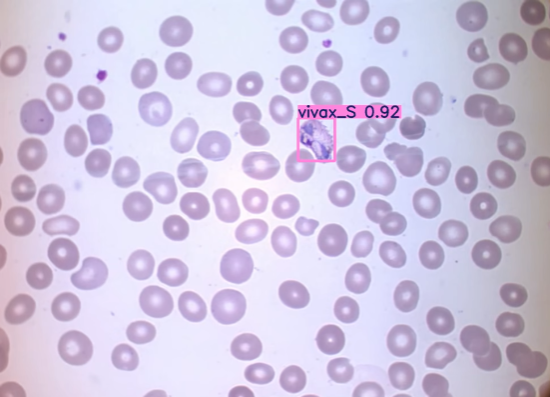
At Northhaven Analytics, we do not just observe these global challenges — we engineer deep-tech solutions to solve them. We engineered a computer vision diagnostic system designed to identify the malaria parasite directly from microscopic blood smear imagery, dramatically reducing manual screening time while maintaining extreme diagnostic precision.
classified
precision
precision
architecture
Understanding the Malaria Infection: How an Infected Mosquito and the Malaria Parasite Transmit Malaria
To understand the profound impact of our AI architecture, one must first understand the biology of a malaria infection. When an individual enters an area where malaria is common, they are at high malaria risk. The moment an infected mosquito bites a human, it can actively transmit malaria parasites directly into the bloodstream.
The Anopheles mosquito acts as a deadly vector. Upon biting a human host, it injects Plasmodium sporozoites directly into the bloodstream. This is the moment malaria transmission begins.
The parasite travels to the liver within minutes, invades hepatocytes, and begins an asymptomatic multiplication phase — producing thousands of merozoites before the patient feels any symptom.
Merozoites burst out of the liver and aggressively invade red blood cells. They reproduce, rupture the cells, and reinvade in cycles — each rupture causing the characteristic fever spikes of malaria.
If left untreated, Plasmodium falciparum can cause red blood cells to adhere to cerebral blood vessels — leading to cerebral malaria, the most lethal form, which can be fatal within hours.
There are several species of malaria that affect humans, causing what is collectively known as human malaria — distinct from avian malaria in birds or simian malaria in primates. If left untreated, the infection rapidly escalates, leading to catastrophic malaria deaths.
The Symptoms of Malaria: From Uncomplicated Cases to Severe Malaria and Cerebral Malaria
The initial malaria symptoms are often flu-like, making clinical diagnosis challenging without microscopic verification. Depending on the types of malaria involved, these symptoms can rapidly deteriorate into life-threatening severe symptoms.
Cyclical fever spikes corresponding to red blood cell rupture cycles. Often misdiagnosed as influenza in low-prevalence settings.
UncomplicatedProfound fatigue, muscle pain, and headache accompany fever cycles. Patients often cannot stand or eat without intervention.
UncomplicatedPlasmodium falciparum malaria can cause acute respiratory distress, renal failure, severe anaemia, and multi-organ dysfunction requiring intensive care.
SevereThe most lethal form. Parasites cross the blood-brain barrier, causing seizures, coma, and permanent neurological damage. Mortality exceeds 20% even with treatment.
CriticalDetecting these threats early is why the laboratory diagnosis of malaria is an absolute race against time. The transition from uncomplicated to severe malaria can occur within 24 hours in P. falciparum infections.
The Global Scale: Analyzing the World Malaria Report, the Burden of Malaria, and Malaria Control in Africa
The statistical reality of this crisis is staggering. According to the latest world malaria report, there are hundreds of millions of malaria cases recorded annually. The incidence of malaria and the sheer burden of malaria disproportionately affect developing nations. An overwhelming share of global malaria mortality occurs in regions lacking advanced medical infrastructure.
Malaria control in Africa is the epicenter of the fight. In any country where malaria is endemic, public health officials rely on massive malaria programmes driven by organizations like the CDC (Centers for Disease Control and Prevention) to manage malaria control and elimination. From distributing insecticidal nets to monitoring changes in malaria epidemiology, continuous malaria surveillance systems are vital.
Clinical Guidelines for Malaria: Treatment, Antimalarial Drug Resistance, and Malaria in Pregnant Women
Current guidelines for malaria emphasize rapid testing and immediate medication. The treatment of uncomplicated malaria relies heavily on artemisinin-based combination therapies. However, administering the correct antimalarial drug requires knowing exactly which parasite is present. For instance, falciparum malaria requires different protocols than P. vivax.
Furthermore, vulnerable populations require specialized care. Malaria in pregnant women is particularly dangerous, prompting health organizations to administer intermittent preventive treatment. Doctors must also carefully manage falciparum malaria in nonpregnant adults who develop severe malaria. While research into an effective malaria vaccine (such as RTS,S) continues, rapid diagnostic testing remains the frontline defense to quickly treat malaria.
Why species identification matters: Treating P. vivax with falciparum-targeted drugs — or vice versa — leads to treatment failure and accelerates drug resistance. Antimalarial drug resistance is already a critical global health threat. Precise AI-based species identification at the point of care directly prevents this outcome.
Revolutionizing the Gold Standard for Malaria Diagnosis with YOLOv10 and Deep Learning
For over a century, the gold standard for malaria diagnosis has been the manual examination of blood smears under a microscope by a trained parasitologist. In an area where malaria spreads rapidly and medical personnel are overwhelmed, this manual process becomes a critical bottleneck.
To combat this, Northhaven Analytics engineered a highly sophisticated computer vision architecture. Under the hood, our diagnostic model is based on YOLOv10 from Ultralytics, seamlessly combined with a custom Convolutional Neural Network (CNN).
State-of-the-art real-time object detection. Processes full blood smear slides in milliseconds — identifying and classifying parasitized cells simultaneously across the entire field of view.
A convolutional neural network layer fine-tuned specifically for erythrocyte morphology. Distinguishes between 16 Plasmodium strain phenotypes with clinical-grade precision.
High-quality annotated medical data is incredibly scarce. Northhaven’s generative techniques produced mathematically perfect synthetic blood smear variations — exposing the AI to infinite edge cases impossible to source from clinical datasets alone.
Overcoming Data Scarcity: How Synthetic Augmented Datasets Improve Malaria Incidence Tracking
Building robust AI for global health and pathology is notoriously difficult because high-quality, annotated medical data is incredibly scarce. To solve this, Northhaven utilized advanced generative techniques. We trained the network heavily using synthetic augmented datasets. By generating mathematically perfect variations of blood smear imagery, we exposed the AI to infinite edge cases, allowing it to accurately identify potential artifacts or staining errors and focus purely on the pathogen.
Unprecedented Precision: Analyzing 16 Plasmodium Strains to Prevent Malaria and Optimize Malaria Treatment
Our Computer Vision diagnostic system is not a generic tool — it is highly specialized. The system can successfully distinguish between 16 different Plasmodium strains, delivering highly promising diagnostic precision by class. This level of granular accuracy is crucial: distinguishing P. falciparum ensures that healthcare providers can administer the exact right treatment for malaria before the patient progresses to clinical malaria.
When clinicians can rapidly confirm cases, they can effectively deploy malaria interventions, drastically reduce malaria fatalities, and optimize malaria treatment supply chains. The speed advantage alone — seconds versus 30–60 minutes for manual microscopy — is transformative in high-burden settings.
The Future of Global Health: Using Machine Learning to Review Malaria Protocols and Protect Malaria Endemic Areas
The idea behind this project wasn’t to build a „perfect” system overnight, but to explore exactly how far object detection and deep learning can go in real-world medical applications. It is a practical, on-the-ground step forward for AI in diagnostics.
By integrating tools like ours into national malaria surveillance systems, governments can accurately track the prevalence of malaria and the exact cases of malaria in real-time. Whether monitoring malaria in a new village or executing broad malaria prevention and control strategies, AI provides the speed and scale that manual screening simply cannot achieve.
Malaria is a serious threat, but it is one we can defeat with technology. If you are working on similar Computer Vision challenges, building AI for Global Health, or are simply curious about the deep-tech infrastructure powering these models — the Northhaven Analytics team would be happy to connect and exchange feedback. Together, we can build the tools needed to finally combat malaria on a global scale.
The same synthetic data infrastructure that powers our financial risk models enables breakthroughs in medical AI. When real patient data is inaccessible — due to privacy laws, data scarcity, or geographic isolation — Northhaven generates statistically perfect synthetic medical imagery that trains diagnostic systems to clinical-grade precision. Zero patient records exposed. Maximum model performance.
Northhaven Analytics
Deep-tech AI diagnostics powered by synthetic data. From malaria detection to financial risk — we engineer solutions that matter.
Get in Touch →