What is Synthetic Data? The Definitive Guide to Generative AI, Privacy, and Future Data Sets
What is Synthetic Data? The Definitive Guide to Generative AI, Privacy, and Future Data Sets
By Northhaven Analytics Research Team
Introduction: Why Real-World Information is Limited and Why We Must Generate Synthetic Data for AI
In the modern algorithm-driven economy, data is scarce. While the world creates petabytes of information daily, high-quality, privacy-compliant original data suitable for AI training is becoming harder to access. Organizations face a wall of regulations (GDPR, CCPA) and internal silos that lock away real-world data. Often, critical projects stall due to data accessibility issues and compliance bottlenecks.
The solution to this paradox is synthetic data.
But what is synthetic data? It is not merely a workaround; it is a superior alternative to real data. Synthetic data is artificial data generated by algorithms that mirrors the statistical properties of real data without containing any personal data or sensitive data.
In this comprehensive guide, we will explore the types of synthetic data, how generative AI models produce synthetic data, and the immense benefit of synthetic data for data scientists needing to train models safely. Whether you need a synthetic dataset for fraud detection, synthetic image sets for computer vision, or tabular data for finance, this article covers everything you need to know about the synthetic data generation lifecycle.
Defining the Concept: What is Synthetic Data and How Synthetic Data is Generated?
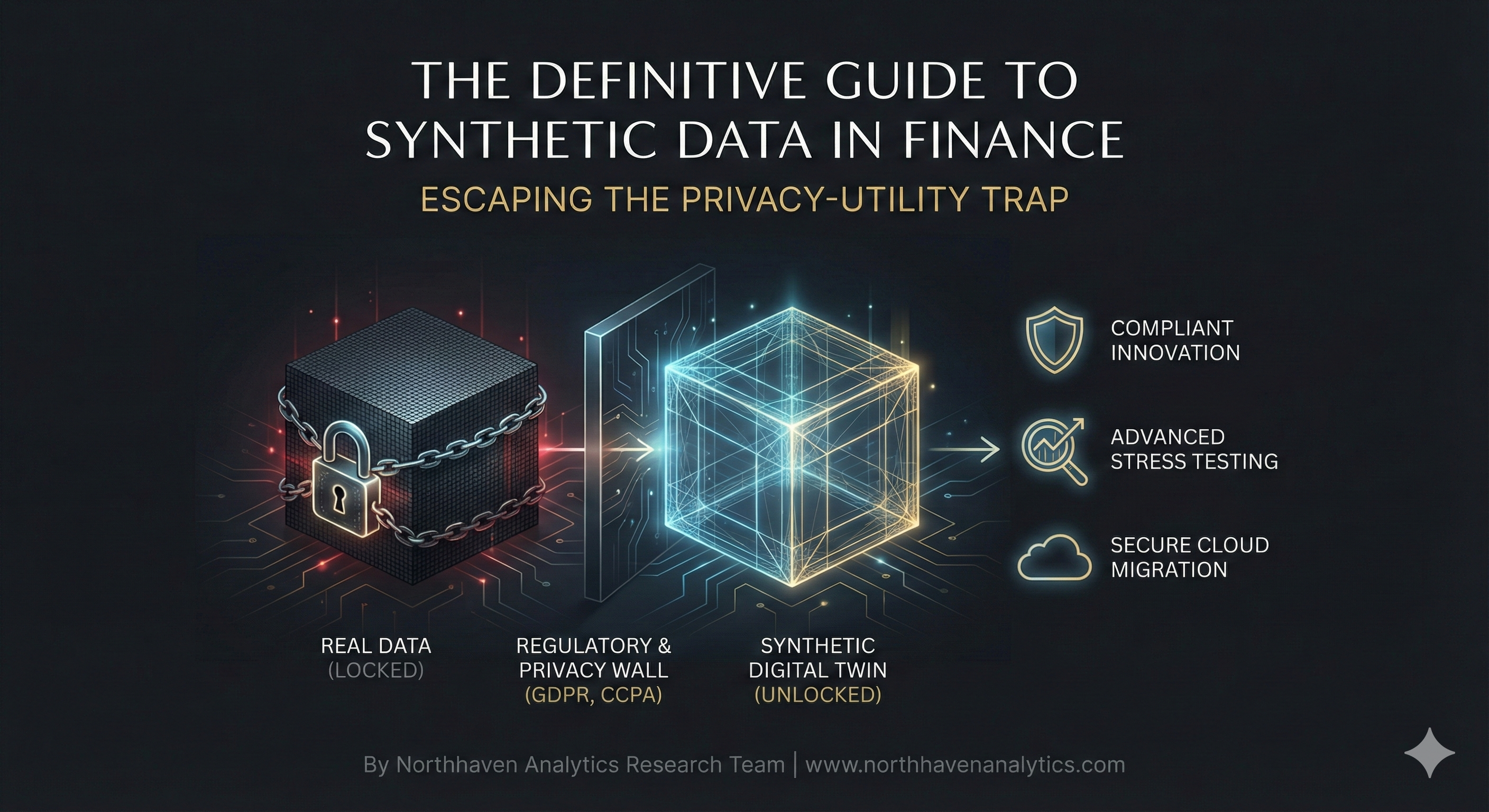
Synthetic data is generated information that mathematically resembles real-world data but is created artificially. It is a digital twin of a source dataset.
Unlike anonymization, which modifies actual data, synthetic data generation builds entirely new data points from scratch. Synthetic data is artificial data that acts as a proxy for the real dataset. By using synthetic data, organizations can bypass the heavy compliance burden associated with original data.
Synthetic Data vs. Real Data: Why Use Synthetic Data Over Source Data?
To understand the value, we must compare synthetic data with traditional inputs.
- Real Data: Collected from real-world events. It contains sensitive details, is often messy, and is subject to strict data privacy laws. Access to the data is slow and fraught with risk.
- Synthetic Data: Artificially generated data that retains the statistical correlations of the source. Synthetic data eliminates privacy risks because there is no 1-to-1 mapping to a real individual.
Synthetic data offers a way to use data freely. It allows data scientists to work with synthetic data in environments where real data is prohibited. Furthermore, synthetic data can also be used to augment small datasets, proving that synthetic data is used to solve scalability issues.
Synthetic Data Generators: Using Generative AI to Create Synthetic Data
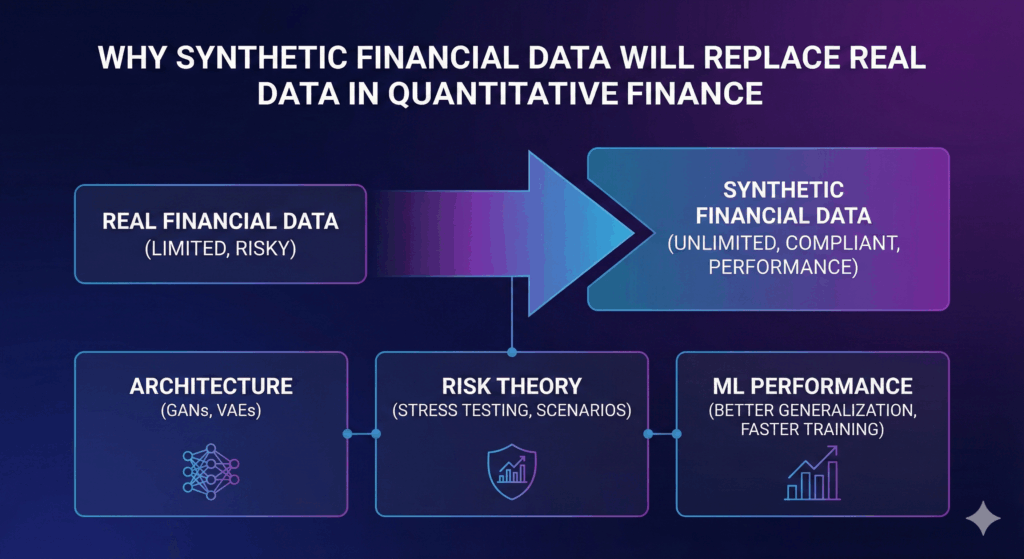
The process to generate synthetic data involves advanced machine learning model architectures. We do not simply randomize values; we learn the underlying manifold of the data. Synthetic data generators are sophisticated engines driven by generative AI.
Generative Adversarial Networks: How GANs Produce Synthetic Data
Generative adversarial networks (GANs) are the engines of modern synthesis. A GAN consists of two neural networks:
- The Generator: Attempts to construct synthetic records.
- The Discriminator: Tries to distinguish synthetic data from real data.
This adversarial process forces the generator to produce synthetic data that is indistinguishable from the original data. Generative adversarial networks excel at capturing the complex, non-linear relationships within a data set.
Variational Autoencoders: Using Real Data to Train Generative Models
Another powerful method involves variational autoencoders. This architecture compresses input data into a lower-dimensional latent space representation and then reconstructs new data from that space. Once processed, this data is used to train the system to understand conditional probabilities and distributions.
By using real data to train these generative models, we ensure the output mimics real-world data perfectly. This approach ensures that the synthetic data generated is robust enough for enterprise data use.
Types of Synthetic Data: From Fully Synthetic Datasets to Hybrid Approaches
Not all synthetic datasets are created equal. Depending on the use case, data science teams might employ different types of synthetic data.
1. Fully Synthetic Data: Creating Entirely New Data for Maximum Privacy
This is a synthetic data set where every single record is artificially generated. It contains entirely new data. Fully synthetic data provides the maximum data protection because it has zero link to the original data. It is ideal for sharing data externally or cloud migration. Fully synthetic data is the gold standard for privacy.
2. Partially Synthetic Data: Blending Synthetic Data with Real Data
In some scenarios, you might replace only the sensitive columns (like names or SSNs) with synthetic values while keeping non-sensitive columns (like zip codes) real. Partially synthetic data is useful when data preserves specific high-value real-world attributes but carries a higher re-identification risk compared to a fully synthetic data approach.
3. Hybrid Synthetic Data: Augmenting Source Data with Synthetic Datasets
Hybrid synthetic data blends real data and synthetic data to create a larger training data set. This is often used when original data is scarce and you need to augment the dataset to train a robust AI model. Hybrid synthetic data leverages the best of both worlds.
Why Use Synthetic Data? The Strategic Benefit of Synthetic Data for Data Science
The use of synthetic data is transforming industries. Why should you synthesize records instead of collecting them? The benefit of synthetic data goes beyond privacy.
Solving Data Scarcity: How Synthetic Data Can Help Improve Data Quality
Often, information is limited for specific edge cases (e.g., rare fraud patterns). We can produce synthetic samples to oversample these rare events, creating a balanced synthetic dataset. Furthermore, we can fix data quality issues like missing values during the generation process. Synthetic data allows for the creation of perfect, clean baselines.
Data Privacy and Protection: Synthetic Data Protects Sensitive Data
Data privacy is the primary driver. Synthetic data protects privacy because it is not personal data. It falls outside the scope of privacy regulations like GDPR and CCPA. This allows synthetic data across borders to be shared without legal friction. Data protection officers prefer synthetic data because it eliminates the risk of a breach.
Accelerating AI Training: Using Synthetic Datasets to Train Models
Data scientists spend 80% of their time waiting for data access. By establishing a synthetic data vault—a repository of pre-generated assets—teams can access training data instantly. Synthetic data allows for rapid iteration of AI models. Enterprises leverage this data to aid in the rapid prototyping of models without touching the production warehouse.
How Synthetic Data is Used: Synthetic Data Use Cases in Finance and AI

Synthetic data use is exploding across sectors. Synthetic data can be used to solve complex problems where real data fails.
Synthetic Financial Data: Fraud Detection and Risk Modeling
Finance institutions use synthetic data to train fraud detection systems and credit scoring models. Synthetic financial data allows for stress testing against economic crashes that haven’t happened yet. Synthetic data helps model liquidity risk.
Healthcare and Computer Vision: Generating Synthetic Images and Tabular Data
Healthcare hospitals generate synthetic patient records to share tabular data for research without violating HIPAA. Creating synthetic data accelerates drug discovery. Meanwhile, self-driving car companies use synthetic image datasets to train cars to recognize pedestrians in bad weather—scenarios difficult to collect in the real world.
Natural Language Processing: Training LLMs on Synthetic Text
LLMs are trained on synthetic text to avoid copyright issues and improve reasoning capabilities. AI-generated synthetic data is feeding the next generation of AI. Synthetic data can also be used for software testing (test data) where production data cannot be used.
The Workflow: How to Generate Realistic Synthetic Data Step-by-Step
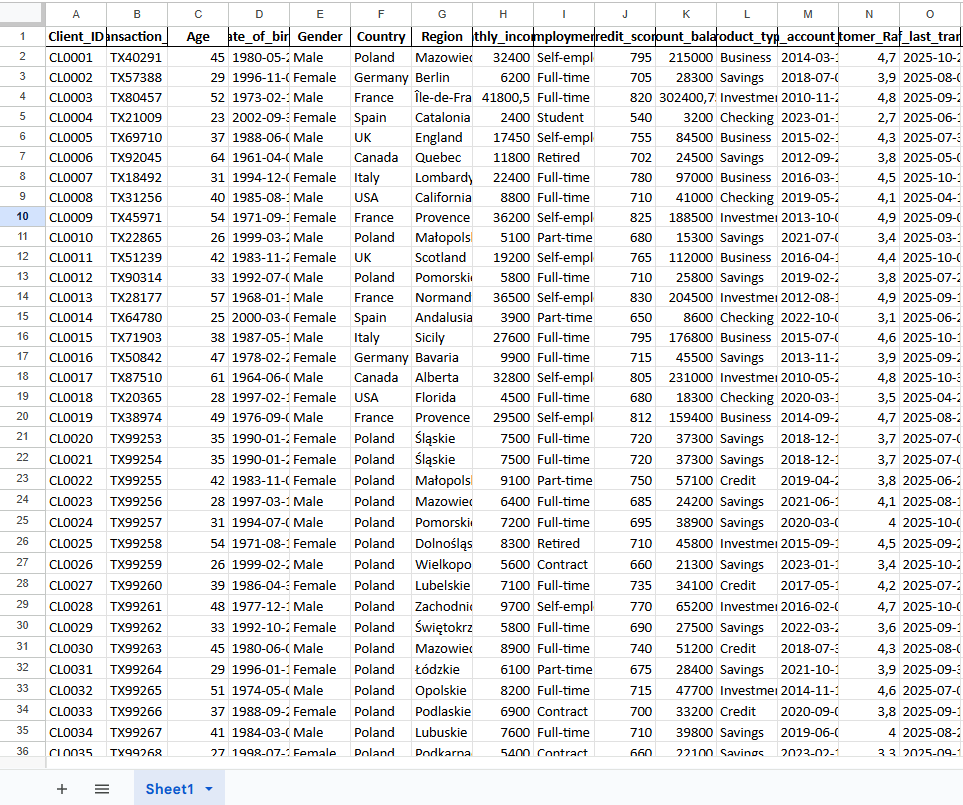
To generate realistic synthetic assets, Northhaven Analytics follows a rigorous pipeline.
- Ingest: Connect to the real dataset or existing data.
- Train: Using real data to train the generative AI model. The model learns the statistical properties of real data.
- Generate: The model reconstructs new data points. We can synthesize information at infinite scale.
- Validate: We compare the synthetic data and source material. Does the synthetic data set capture the correlations?
- Deploy: The synthetic dataset is pushed to the synthetic data vault for data use.
This workflow ensures we generate artificial data that is high-fidelity and privacy-safe.
Challenges: Ensuring the Quality of Synthetic Data and Data Utility
While powerful, synthetic data generation has challenges. The quality of synthetic data is paramount. If the generative model fails to capture the complex data structures, the generated data will be useless junk.
Measuring Fidelity: Does Synthetic Data Mimic Real-World Data?
Data quality metrics must measure fidelity: How well the synthetic data mimics real-world distributions and properties of the original data. We ensure that the synthetic data reflects the nuances of the original dataset.
Privacy vs Utility: Validating AI Models on Synthetic Datasets
We calculate metrics like “Distance to Closest Record” to ensure the model didn’t memorize the original dataset. We also test utility: Can an AI model trained on the synthetic dataset perform as well as one trained on real data? Synthetic data depends on the sophistication of the synthetic data generators. Synthetically generated data must be rigorously tested to ensure it provides valid new data points.
Conclusion: The Future is Artificially Generated Data
The era of relying solely on existing data is over. Data is crucial, but data without privacy is a liability. Real-world information is limited in utility, even if abundant in volume.
Synthetic data is used today to build the AI models of tomorrow. It allows organizations to create synthetic worlds where models can learn safely. Whether you need tabular data for a bank or synthetic image data for a robot, generative AI provides the answer.
Synthetic data may soon replace real data as the primary source for AI training. It offers new data points, protects sensitive data, and unlocks the full potential of data science. Real-world training data is being augmented by synthetic data to create hybrid datasets of immense power.
At Northhaven Analytics, we help you produce synthetic data that is mathematically rigorous. We ensure your synthetic data generated is ready for the enterprise.
Ready to generate synthetic data? Unlock the power of synthetically generated data with Northhaven Analytics.

mintHealth
The autonomous procurement operating system for ambulatory surgical centers — built by Northhaven.